Table of Contents
- Is Airway Dentistry Scientifically Proven? The Core Question Answered
- Airway Dentistry Scientific Evidence: What Research Actually Shows
- Oral Appliance Therapy Sleep Apnea Evidence: How Strong Is It?
- Myofunctional Therapy Scientific Evidence: Retraining Tongue Posture and Breathing Patterns
- Palatal Expansion Airway Benefits: Evidence for Children and Adults
- Why Airway Issues Are Rising: Evolutionary Changes and Modern Lifestyle Factors
- Risks, Limitations, and Honest Expectations for Airway Dentistry Treatments
- Diagnosis and Assessment: How Airway Dentistry Identifies Root Causes
Last Updated: July 31, 2026
The question of whether airway dentistry is scientifically proven comes up constantly among patients who’ve spent years cycling through treatments that address symptoms without touching the root cause. At Real Smile Dentistry, we hear this skepticism regularly, and it’s fair. The field sits at the intersection of dental medicine, sleep science, and craniofacial biology. While evidence is strong in some areas, it’s still developing in others. Below, we’ll walk through what research supports, where science is maturing, and what patients in Miami should realistically expect.
Is Airway Dentistry Scientifically Proven? The Core Question Answered
Airway dentistry is a clinical approach that addresses the relationship between oral structures, craniofacial development, jaw alignment, and breathing patterns to improve dental health and overall well-being. The short answer: foundational principles are well-supported by peer-reviewed research, but the field is evolving, and not every specific protocol carries the same depth of clinical evidence.
The link between obstructive sleep apnea and upper airway anatomy is extensively documented. Oral appliances for sleep-disordered breathing are backed by American Academy of Sleep Medicine guidelines. Myofunctional therapy’s role in improving tongue posture and nasal breathing has solid evidence. Palatal expansion for airway improvement in children has decades of clinical support.
What’s less settled is the precise protocol hierarchy: which interventions work best for which patients in which sequence. That’s not a reason to dismiss airway dentistry, it’s a reason to work with practitioners who understand the evidence and apply it honestly.
Airway dentistry’s core principles are scientifically grounded. The field’s strongest evidence covers oral appliance therapy for sleep apnea, myofunctional therapy, and pediatric palatal expansion. Patients should expect honest, evidence-based care rather than blanket claims.
Airway Dentistry Scientific Evidence: What Research Actually Shows
Most guides either oversell airway dentistry as a complete paradigm shift or dismiss it as fringe. Both positions miss the actual picture.
The Link Between Oral Structures and Sleep-Disordered Breathing
The connection between oral cavity anatomy and sleep-disordered breathing is one of the most studied areas in sleep medicine. Mandibular retrognathia, palate shape, tongue posture, tonsil grading, and dental arch width all influence airflow through the upper airway during sleep. According to National Heart, Lung, and Blood Institute on sleep apnea causes, anatomical features of the mouth and throat are primary contributors to obstructive sleep apnea, affecting millions of adults in the United States.
Craniofacial development patterns directly shape how much space exists for the tongue and soft tissues. Narrow dental arches, high palatal vaults, and retrognathic jaws reduce available airway space. This is standard anatomy taught in medical and dental schools, not fringe theory.
Why Airway Dentistry Is Still an Evolving Field
Airway dentistry as a branded discipline is newer than its underlying science. Some practitioners have applied the label broadly to treatments lacking the same evidence base as core interventions like oral appliance therapy. Standardized diagnostic criteria, outcome measurement protocols, and long-term follow-up data are still being developed.
This evolution doesn’t invalidate the approach. It means patients should ask their provider which specific interventions are being recommended and what evidence supports each one.
Oral Appliance Therapy Sleep Apnea Evidence: How Strong Is It?
Oral appliance therapy for sleep apnea has the strongest evidence base of any airway dentistry intervention. The American Academy of Sleep Medicine and the American Academy of Dental Sleep Medicine both recognize oral appliances as a first-line treatment option for mild to moderate obstructive sleep apnea and as an alternative for patients who cannot tolerate CPAP therapy.
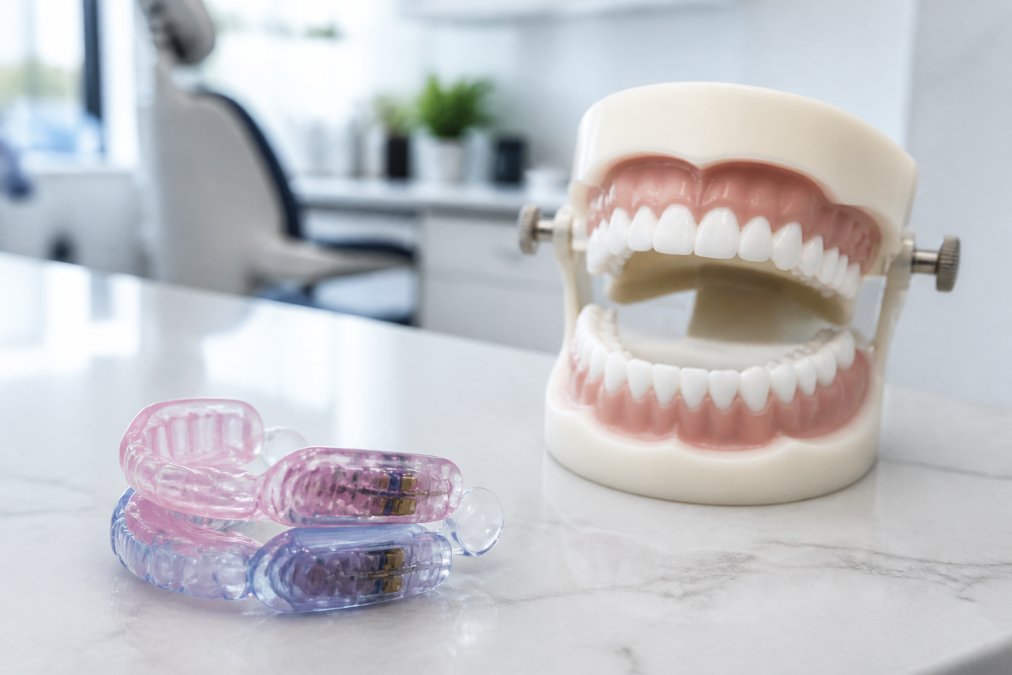
Oral appliances work by repositioning the mandible forward during sleep, increasing posterior airway space and reducing airway obstruction likelihood. Custom-fitted devices, fabricated from precise dental impressions, consistently outperform over-the-counter alternatives.
According to American Academy of Sleep Medicine clinical practice guidelines, custom oral appliances effectively reduce the apnea-hypopnea index and improve oxygen levels in patients with OSA. Patient adherence with oral appliances tends to be higher than with CPAP, which is clinically significant because a treatment that’s actually used consistently outperforms a theoretically superior one that isn’t.
At Real Smile Dentistry, oral appliance treatment is complemented by Fotona laser therapy for OSA, which addresses soft tissue laxity in the upper airway alongside the positional correction the appliance provides. This combined approach reflects a more complete understanding of anatomical factors involved in airway obstruction.
Proper diagnosis, including imaging and sleep study data, is essential before treatment begins. Severity of OSA, jaw anatomy, and patient compliance all affect outcomes.
| Treatment Approach | Evidence Level | Best Suited For | Key Consideration |
|---|---|---|---|
| Custom oral appliance | High (AASM-endorsed) | Mild to moderate OSA | Requires dental fitting and follow-up |
| Oral appliance + laser therapy | Emerging combined evidence | Moderate OSA, CPAP-intolerant patients | Addresses soft tissue and jaw position |
| CPAP therapy | High (gold standard) | Severe OSA | Adherence is a common challenge |
| Palatal expansion | Moderate (stronger in pediatrics) | Narrow arch, nasal obstruction | Long-term structural benefit |
| Myofunctional therapy | Moderate | All ages, adjunct to other treatment | Requires consistent patient practice |
Patients who self-diagnose and purchase over-the-counter oral appliances without professional assessment risk worsening jaw symptoms or missing a more serious underlying condition. A proper sleep study and dental evaluation are the correct starting point.
Myofunctional Therapy Scientific Evidence: Retraining Tongue Posture and Breathing Patterns
Myofunctional therapy targets function rather than structure. The goal is to retrain the muscles of the tongue, lips, and face to establish correct tongue posture, nasal breathing, and proper swallowing patterns.
Evidence for myofunctional therapy has strengthened considerably over the past decade. Research published through the American Academy of Orofacial Myology demonstrates that oropharyngeal exercises can reduce snoring severity and the apnea-hypopnea index in adults with OSA. In children, myofunctional therapy addresses mouth breathing habits that can alter craniofacial development over time.
Incorrect tongue posture reduces the natural support the tongue provides to the palate, contributing to palatal narrowing, dental arch constriction, and reduced nasal airflow. Retraining tongue posture to rest against the palate supports normal facial growth patterns in children and improves airway function in adults.
For patients with tongue tie or lip tie, addressing the tethered oral tissue first is essential. Myofunctional therapy without releasing significant tongue tie produces limited results. It works best as part of a coordinated treatment plan that includes orthodontic or orthopedic intervention when needed.
Palatal Expansion Airway Benefits: Evidence for Children and Adults
Palatal expansion has one of the longest evidence tracks in airway dentistry, particularly for pediatric patients. The palate forms the floor of the nasal cavity. A narrow palate directly narrows the nasal passage above it, reducing nasal airflow and increasing mouth breathing likelihood.
According to American Association of Orthodontists on early orthodontic treatment, early orthopedic intervention in children can guide jaw and palatal development in ways significantly more difficult to achieve after skeletal maturity. This is the scientific basis for early interceptive orthodontics, which Real Smile Dentistry applies through its early interventional orthopedics program for children.
In children, the mid-palatal suture remains open and responsive to orthopedic force until early adolescence. Rapid palatal expansion devices can widen the dental arch, increase nasal airway volume, and reduce airway obstruction during this window. Earlier intervention allows developing craniofacial structures to be guided toward their full growth potential.
In adults, palatal expansion is more complex because the mid-palatal suture has fused. Surgical options exist, but evidence for non-surgical adult palatal expansion is more limited.
For parents concerned about a child’s breathing, snoring, or facial growth patterns, the most valuable action is an early assessment before skeletal maturity closes the window for non-invasive orthopedic intervention. Waiting typically means more complex treatment later.
Why Airway Issues Are Rising: Evolutionary Changes and Modern Lifestyle Factors
The prevalence of airway issues is genuinely increasing. Evolutionary anthropologists and dental researchers have documented significant changes in human craniofacial structure over the past several centuries, linked to changes in diet, food texture, and oral habits.
The shift from tough, fibrous foods requiring substantial chewing to processed, soft diets has reduced mechanical stimulation that drives jaw and facial bone development. Less chewing force during childhood means less stimulus for dental arch width, palatal development, and overall craniofacial growth. The result is narrower dental arches, more crowded teeth, and reduced airway space.
Mouth breathing habits, triggered by chronic nasal congestion, allergies, or early pacifier use, compound this. Mouth breathing during childhood actively alters facial growth patterns. The tongue drops from the palate, dental arches narrow, and the face develops in a longer, more vertical direction rather than the broader, more forward pattern associated with adequate nasal breathing.
This explains why orthodontists and airway-focused dentists are seeing more patients with narrow arches, crowded teeth, and sleep issues than previous generations did. Understanding the cause makes early intervention logical rather than speculative.
Risks, Limitations, and Honest Expectations for Airway Dentistry Treatments
Every treatment carries trade-offs, and patients deserve a clear picture.
Potential Side Effects of Common Airway Treatments
Oral appliances can cause jaw soreness, tooth sensitivity, and bite alignment changes, particularly during adjustment. Some patients experience temporary TMJ discomfort as the jaw adapts. With proper follow-up and adjustment, these effects are generally manageable.
Palatal expansion in adults carries higher risk than in children, including discomfort, speech changes during treatment, and the possibility that non-surgical expansion may be insufficient. Myofunctional therapy requires sustained patient effort over months. Compliance determines outcomes.
Laser therapy for OSA is newer with a growing evidence base. It’s appropriate to view it as a useful adjunct rather than a standalone cure for significant OSA.
Outcomes vary significantly based on patient anatomy, condition severity, and treatment adherence. No responsible practitioner should promise specific results.
Cost and Insurance Coverage: What Patients in Miami Should Know
Airway dentistry treatments span a range of complexity and costs. Oral appliance therapy for diagnosed OSA is often covered under medical insurance when a sleep study confirms diagnosis. Early orthodontic intervention for children may have partial coverage. Myofunctional therapy coverage varies widely.
Contact Real Smile Dentistry directly for a consultation to discuss the specific treatment plan, associated costs, and insurance reimbursement eligibility. Estimating costs without a diagnosis produces meaningless numbers.
Diagnosis and Assessment: How Airway Dentistry Identifies Root Causes
Diagnosis in airway dentistry distinguishes itself from conventional dentistry. A traditional dental exam focuses on teeth and gums. An airway-centered assessment examines the entire oral cavity, jaw alignment, tongue posture, breathing patterns, and upper airway anatomy.
CBCT imaging is the diagnostic standard for airway assessment. Cone beam computed tomography provides three-dimensional imaging of the jaws, dental arches, nasal passages, and upper airway, allowing measurement of airway volume and identification of structural obstruction contributors. This is substantially more informative than two-dimensional dental X-rays.
Screening tools include tonsil grading assessments, tongue tie evaluation, nasal breathing tests, and sleep study data review when available. ENT collaboration and sleep physician coordination are part of a complete diagnostic picture for patients with significant sleep-disordered breathing.
The diagnostic process also evaluates bruxism and teeth grinding, frequently associated with sleep-disordered breathing. Many patients present with worn teeth and jaw pain without realizing nighttime airway obstruction drives the grinding. Treating the airway issue often reduces bruxism severity as a downstream effect.
Patients who’ve spent years managing jaw pain, chronic headaches, or poor sleep quality without resolution often find the missing piece was an airway assessment. Real Smile Dentistry combines CBCT imaging, Fotona laser technology, custom oral appliance therapy, and early interceptive orthopedics for children into a coordinated, evidence-based approach that addresses root causes rather than recurring symptoms. If you’re ready to understand what’s actually driving your discomfort, Book Now to schedule a comprehensive evaluation with the Real Smile Dentistry team.
Frequently Asked Questions
Is airway dentistry scientifically proven, or is it just a trend?
Airway dentistry draws on established research in sleep medicine, orthodontics, and craniofacial development. The American Academy of Dental Sleep Medicine and the American Academy of Sleep Medicine both recognize oral appliance therapy for obstructive sleep apnea as an evidence-based treatment. Myofunctional therapy and palatal expansion also have published clinical support, though the broader field continues to evolve. It is best described as a scientifically grounded discipline still accumulating long-term outcome data, rather than an unproven trend.
What does the evidence say about oral appliance therapy for sleep apnea?
Oral appliance therapy sleep apnea evidence is well-established enough that the American Academy of Sleep Medicine includes mandibular advancement devices in its clinical practice guidelines for adults with obstructive sleep apnea who cannot tolerate CPAP. Research shows these devices reposition the lower jaw and tongue to reduce upper airway obstruction, lower the Apnea-Hypopnea Index, and improve sleep quality. Outcomes vary by patient anatomy and OSA severity, so a proper diagnosis and customized fitting are essential for best results.
How does myofunctional therapy fit into airway dentistry, and is it backed by science?
Myofunctional therapy involves targeted exercises to correct tongue posture, lip seal, and nasal breathing patterns. Myofunctional therapy scientific evidence includes peer-reviewed studies suggesting it can reduce the severity of obstructive sleep apnea in both adults and children, and it is often used alongside other airway dentistry treatments. It addresses the muscular dysfunction that contributes to mouth breathing and airway obstruction. Results depend on patient consistency, and it is generally recommended as part of a comprehensive treatment plan rather than a standalone solution.
What are the benefits of palatal expansion for airway issues?
Palatal expansion widens the upper dental arch and nasal floor, which can increase nasal airflow and reduce airway obstruction. Palatal expansion airway benefits are most pronounced in pediatric patients whose craniofacial development is still active, though some appliances are designed for adults. Research suggests it can improve nasal breathing, reduce sleep-disordered breathing symptoms, and support healthier facial growth patterns. Early intervention in children is generally considered more effective than attempting expansion in fully developed adult bone structures.
Are there risks or limitations to airway dentistry treatments I should know about?
Yes. Oral appliances can cause temporary jaw soreness, tooth movement, or changes in bite alignment if not properly monitored. Palatal expansion in adults carries more complexity and potential discomfort than in children. Myofunctional therapy requires sustained effort and may not fully resolve severe structural issues on its own. Airway dentistry also does not replace medical evaluation, conditions like obstructive sleep apnea require a formal diagnosis from a qualified physician or sleep specialist before any dental treatment begins.
How is airway dentistry different from what a traditional dentist does?
Traditional dentistry typically focuses on repairing individual teeth and gums. Airway dentistry takes a whole-body, root-cause approach, evaluating how jaw alignment, tongue posture, palate width, and nasal breathing patterns affect sleep quality and overall health. An airway-focused dentist may use CBCT imaging to assess three-dimensional airway space, screen for sleep-disordered breathing, and coordinate care with ENT specialists and sleep physicians, going well beyond what a routine dental checkup covers.
This article was written using GrandRanker