Table of Contents
- Oral Appliance vs CPAP Machine: Quick Comparison Table
- Recognizing Sleep Apnea Symptoms Before Choosing a Treatment
- How Each Treatment Works: CPAP vs Oral Appliance Therapy
- What Is a Mandibular Advancement Device (MAD) and Is It Right for You?
- Effectiveness, Comfort, and Compliance: Where Each Option Wins
- Side Effects and Long-Term Risks: Including Dental Changes
- Cost of Oral Appliance for Sleep Apnea vs CPAP: Insurance and Maintenance
- CPAP Alternatives: The Failed CPAP Transition Path
Last Updated: August 1, 2026
Choosing between an oral appliance vs CPAP machine is one of the most consequential decisions a sleep apnea patient makes. According to the American Academy of Sleep Medicine clinical practice guidelines, oral appliances are a recommended first-line treatment for mild to moderate obstructive sleep apnea and a legitimate alternative for patients who cannot tolerate continuous positive airway pressure therapy. Below, we break down exactly how each treatment works, where each one wins, and how to choose the right path for your airway, your lifestyle, and your insurance.
Oral Appliance vs CPAP Machine: Quick Comparison Table
| Feature | CPAP Machine | Oral Appliance (MAD) |
|---|---|---|
| Mechanism | Pressurized air via mask | Jaw repositioning |
| Best for | Moderate to severe OSA | Mild to moderate OSA |
| Portability | Requires power, bulky | Pocket-sized, no power needed |
| Compliance rates | Lower (mask discomfort) | Generally higher |
| AHI reduction | Most consistent | Effective for right candidates |
| Side effects | Dry mouth, mask leaks, bloating | TMJ discomfort, tooth movement |
| Insurance coverage | Medical insurance (DME benefit) | Medical insurance (oral appliance benefit) |
| Long-term dental risk | Minimal | Possible bite shift over years |
| Maintenance cost | Filters, masks, tubing annually | Periodic adjustments, replacement device |
| Prescription required | Yes | Yes |
Recognizing Sleep Apnea Symptoms Before Choosing a Treatment
Obstructive sleep apnea occurs when the upper airway collapses repeatedly during sleep, causing breathing interruptions that fragment sleep and reduce blood oxygen saturation. Common warning signs include loud snoring with witnessed breathing pauses, waking with a dry mouth, excessive daytime sleepiness, morning headaches, difficulty concentrating, and frequent nighttime urination.
A formal diagnosis requires a polysomnography study conducted in a sleep lab or a portable sleep study at home. The result is an apnea-hypopnea index score: the number of apnea and hypopnea events per hour of sleep. An AHI below 5 is normal; 5-14 is mild; 15-29 is moderate; 30 or above is severe. This number is the single most important factor in determining which treatment is appropriate.
If your bed partner reports that you stop breathing, gasp, or choke during sleep, do not wait for daytime symptoms to worsen. A portable sleep study can now be ordered through many primary care physicians and completed at home in a single night.
How Each Treatment Works: CPAP vs Oral Appliance Therapy
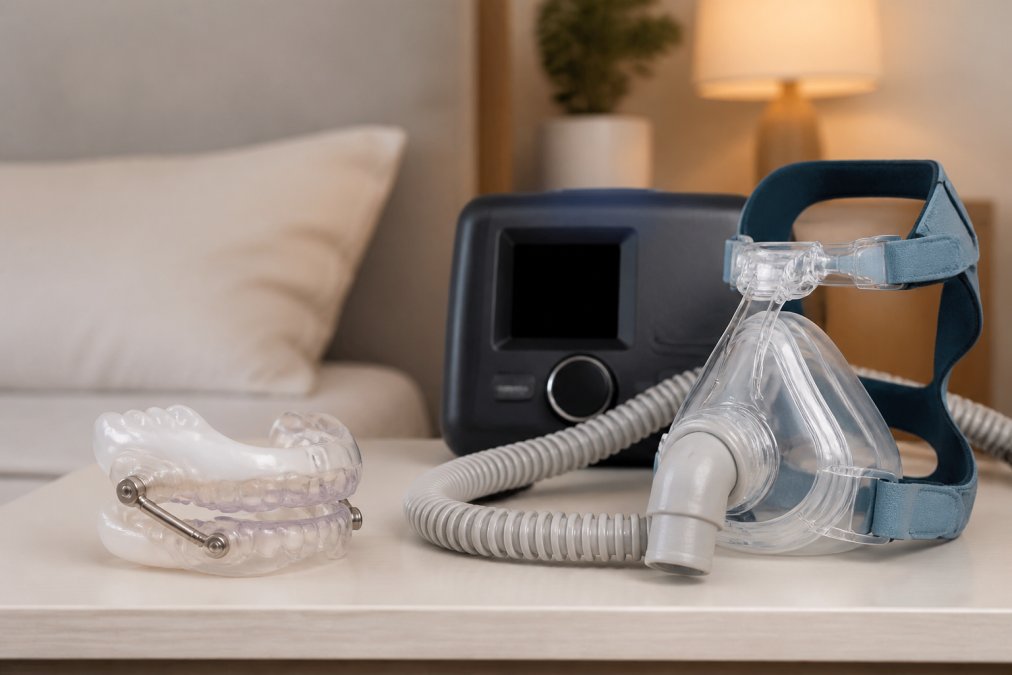
The two treatments address airway obstruction during sleep through completely different mechanisms.
How Continuous Positive Airway Pressure (CPAP) Works
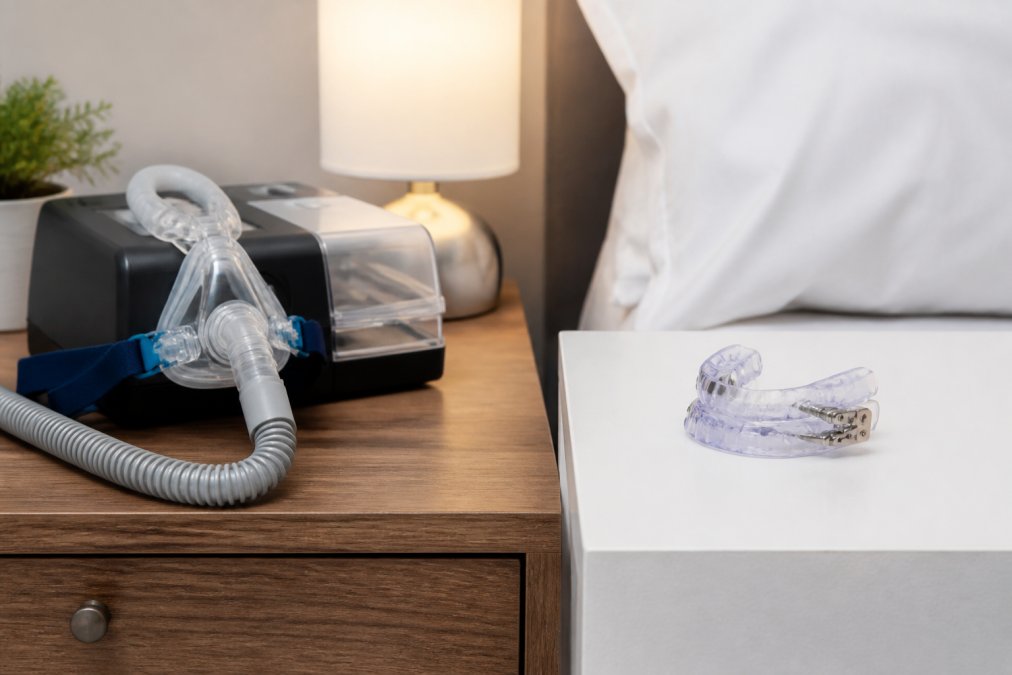
A CPAP machine delivers pressurized air through a mask worn over the nose, mouth, or both. The air pressure acts as a pneumatic splint, holding the airway open throughout the night and preventing soft tissue collapse. Modern devices like the ResMed AirSense 11 AutoSet include auto-titration algorithms that adjust pressure breath by breath, heated humidifiers to reduce dryness, and cellular connectivity for therapy data tracking. CPAP is widely considered the gold standard for moderate to severe obstructive sleep apnea because no other therapy matches its consistency in maintaining airway patency.
How Oral Appliance Therapy Works
Oral appliance therapy uses a custom-fitted device worn in the mouth during sleep to reposition the lower jaw slightly forward. This forward mandibular position tightens soft tissues around the airway, reducing the tendency for the tongue and palate to collapse backward. Devices like the ProSomnus EVO and SomnoDent Avant are custom-fitted and incrementally adjustable so clinicians can titrate the jaw position to therapeutic effectiveness.
What Is a Mandibular Advancement Device (MAD) and Is It Right for You?
A mandibular advancement device is a custom oral appliance that holds the lower jaw in a slightly forward position during sleep, increasing posterior airway space and reducing soft tissue collapse. Ideal candidates have an AHI in the mild to moderate range (5-29 events per hour), positional apnea, strong motivation to avoid masks, sufficient healthy teeth to anchor the device, and no severe untreated temporomandibular joint disorder.
A mandibular advancement device purchased over the counter without custom fitting and a physician’s prescription is not the same as a clinical oral appliance. Boil-and-bite devices sold online are not FDA-cleared for treating obstructive sleep apnea and will not be covered by medical insurance.
Effectiveness, Comfort, and Compliance: Where Each Option Wins
AHI Reduction and Therapeutic Efficacy
CPAP delivers more consistent AHI reduction across the full spectrum of sleep apnea severity. When properly worn and titrated, it virtually eliminates apnea events in most cases. Oral appliance therapy produces meaningful AHI reduction in appropriately selected patients, though the degree varies between individuals. For mild to moderate OSA, clinical outcomes between the two therapies are often comparable when compliance is factored in, because a device worn every night outperforms one that sits unused.
Comfort, Mask Fit, and Treatment Adherence
The biggest vulnerability of CPAP therapy is patient compliance. Mask fit problems, air leaks, pressure intolerance, and claustrophobia are commonly cited reasons patients abandon therapy. Oral appliances tend to achieve higher nightly compliance in head-to-head comparisons. The device is small, silent, and requires no electricity or mask. Patients who previously failed CPAP frequently report sleeping through the night with a MAD for the first time in years.
Portability and Travel Considerations
Oral appliances win decisively on portability. A MAD fits in a small case that goes in a carry-on bag or coat pocket with no power adapters, distilled water requirements, or FAA regulations. CPAP machines have become more travel-friendly, but traveling with one still requires managing the machine, humidifier water, mask, and tubing, which causes some patients to skip therapy on travel nights.
Side Effects and Long-Term Risks: Including Dental Changes
Every effective treatment carries trade-offs.
CPAP Side Effects
Common CPAP side effects include dry mouth and nasal congestion, skin irritation from mask contact, aerophagia (air swallowing) causing bloating, and claustrophobia related to mask wear. Most are manageable with mask adjustments, humidifier settings, or switching mask styles. A well-fitted nasal pillow mask eliminates most skin contact issues.
Long-Term Dental Side Effects of Oral Appliances
Long-term use of a mandibular advancement device can produce gradual changes in jaw alignment and tooth position. Documented long-term dental side effects include minor tooth movement, reduction in overbite over time, TMJ discomfort, and in some patients, occlusal changes. The clinical consensus is that these changes are generally minor and manageable when the device is properly fitted and monitored by a qualified dental provider. Morning repositioning exercises and periodic occlusal check-ups are standard parts of well-managed oral appliance programs.
Cost of Oral Appliance for Sleep Apnea vs CPAP: Insurance and Maintenance
Insurance Coding and Billing Navigation
Both CPAP machines and custom oral appliances are covered by most major medical insurance plans, including Medicare, when prescribed by a physician following a qualifying sleep study. CPAP machines are billed as durable medical equipment under specific HCPCS codes. Custom oral appliances are billed under different codes as oral devices for sleep apnea treatment. According to the American Academy of Dental Sleep Medicine coverage guidance, most major medical insurers and Medicare cover custom oral appliances when documentation requirements are met.
The billing process for oral appliances runs through medical insurance, not dental insurance. Verify your medical plan’s oral appliance benefit before beginning treatment.
Ask your dental provider whether they bill medical insurance directly for oral appliance therapy. Providers experienced in dental sleep medicine typically have a dedicated insurance coordinator who handles prior authorization and medical coding.
Long-Term Maintenance Cost Comparison
CPAP therapy carries ongoing supply costs. Masks, cushions, headgear, filters, and tubing all have manufacturer-recommended replacement schedules. Custom oral appliances have lower recurring costs. The device itself is durable, and many patients use the same appliance for several years before replacement. Periodic adjustment visits add to the cost over time, but the annual maintenance burden is generally lower than CPAP supplies.
CPAP Alternatives: The Failed CPAP Transition Path
A patient is generally considered to have failed CPAP when they are unable to achieve adequate nightly use despite reasonable attempts at mask fitting and pressure adjustment. Insurance plans recognize this as a documented clinical scenario that justifies transition to alternative therapy, most commonly oral appliance therapy.
The transition process typically involves documentation from the prescribing physician confirming CPAP intolerance, referral to a dental sleep medicine provider, custom fitting of a mandibular advancement device, a follow-up sleep study to confirm therapeutic AHI reduction, and ongoing monitoring. This path matters because insurance coverage for oral appliance therapy after CPAP failure is well-established when properly documented.
Beyond oral appliances, other CPAP alternatives include positional therapy for patients with purely positional apnea, weight management for obesity-related OSA, and surgical options for patients with specific anatomical contributors. The American Academy of Otolaryngology sleep apnea treatment overview provides a clinical framework for evaluating surgical options when conservative therapies have not achieved adequate results.
Real Smile Dentistry offers a comprehensive Dental Sleep program combining custom oral appliance therapy with Fotona laser treatment for obstructive sleep apnea. This combination approach addresses both mechanical airway obstruction and the soft tissue component of OSA. For patients whose children show signs of airway restriction or diminutive jaw growth, the practice also offers early interventional orthopedics to develop the airway during growth years, addressing sleep-disordered breathing before it becomes chronic.
The bottom line on the oral appliance vs CPAP machine decision is this: severity matters, but compliance matters more. A treatment that works perfectly on paper and sits unused treats nothing. Choose the therapy you will actually wear every night, with guidance from a sleep specialist and qualified dental provider who can monitor outcomes and adjust course when needed.
Choosing the right sleep apnea treatment is difficult when navigating physician referrals, insurance requirements, and conflicting information. Real Smile Dentistry provides a comprehensive Dental Sleep program combining custom oral appliance therapy, Fotona laser treatment, and airway-centered dental care to address obstructive sleep apnea at its root cause. The team uses advanced technology including CT scans and intraoral scanners to ensure precise fitting and ongoing monitoring of jaw alignment and airway function. Book a consultation with Real Smile Dentistry and take the first step toward restorative sleep without the mask.
Frequently Asked Questions
Is an oral appliance as effective as a CPAP machine for sleep apnea?
For mild to moderate obstructive sleep apnea, oral appliance therapy can achieve clinically meaningful reductions in the apnea-hypopnea index and is considered an evidence-based treatment by sleep specialists. CPAP is generally regarded as the gold standard for severe sleep apnea because it can maintain airway patency across a wider pressure range. However, real-world patient compliance often favors oral appliances, meaning some patients achieve better outcomes with a device they actually wear consistently. A sleep study and consultation with a qualified provider can determine which option suits your severity level.
What are the main differences between a mandibular advancement device and a CPAP machine?
A mandibular advancement device (MAD) is a custom-fitted oral appliance worn in the mouth that repositions the lower jaw forward to reduce airway obstruction. A CPAP machine delivers continuous positive airway pressure through a mask and hose to keep the airway open mechanically. MADs require no electricity, have no hoses or filters, and are highly portable. CPAP machines offer precise pressure titration and real-time data tracking. Both require a prescription and a polysomnography or portable sleep study for diagnosis before treatment begins.
Does insurance cover oral appliances for sleep apnea?
Many medical insurance plans, including Medicare, cover custom oral appliances for obstructive sleep apnea when specific criteria are met, such as a documented sleep study diagnosis and a prescription from a physician. Coverage is typically billed under medical insurance, not dental insurance, using specific medical billing codes. Navigating this process requires coordination between your sleep specialist, your dentist, and your insurer. Always verify your plan's coverage criteria and required documentation before starting treatment, and ask your dental provider whether they handle medical billing for sleep devices.
What happens if I can't tolerate my CPAP machine, can I switch to an oral appliance?
Yes. CPAP intolerance is one of the most common reasons patients explore oral appliance therapy as a CPAP alternative. The transition typically involves documenting your CPAP intolerance with your sleep specialist, obtaining a referral or prescription for an oral appliance, and being fitted by a dentist trained in dental sleep medicine. A follow-up sleep study or home portable sleep study is usually required after titration to confirm the appliance is effectively reducing your apnea-hypopnea index. Some patients also benefit from combination approaches that include laser-assisted airway treatment.
Do oral appliances cause jaw pain or long-term dental changes?
Some patients experience temporary jaw soreness, TMJ discomfort, tooth tenderness, or increased salivation when first using an oral appliance, these side effects often resolve as the jaw adapts. However, long-term use can cause gradual shifts in jaw alignment and minor changes in bite position in some patients. Regular follow-up with your dental provider is important to monitor jaw alignment and occlusal changes. A provider experienced in physiologic and airway-centered dentistry can help manage these risks through proper device titration and periodic occlusal assessments.
Which sleep apnea treatment is better for travel, CPAP or an oral appliance?
Oral appliances have a clear advantage for travel. A custom mandibular advancement device is small enough to fit in a carry-on pouch, requires no electricity, and has no hoses, filters, or water chambers to manage. CPAP machines, while increasingly compact, models like the ResMed AirSense 11 and Philips DreamStation 2 are designed with travel in mind, still require a power source, distilled water for the humidifier, and TSA screening. For frequent travelers or those who camp or travel internationally, an oral appliance is generally the more convenient CPAP alternative.
This article was written using GrandRanker