Table of Contents
- What Does It Mean When Your Bite Feels Misaligned?
- Symptoms of Malocclusion: What to Notice
- Why Your Bite Feels Off: Common Causes
- TMJ Disorder Symptoms and Bite Misalignment
- How to Fix Misaligned Teeth: Treatment Options
- Self-Assessment: When to Seek Professional Help
- Home Care and Pain Management While You Seek Treatment
- Why Treating Bite Misalignment Matters for Your Overall Health
Why Your Bite Feels Misaligned: Causes & Relief
Last Updated: August 4, 2026
When you close your teeth together, they should meet comfortably and balanced. If your bite feels off, you’re not alone, many people experience this discomfort. At Real Smile Dentistry, we understand that bite misalignment is one of the most common concerns patients bring to our office. The answer often involves multiple factors ranging from temporary stress to structural changes. Understanding what’s causing your bite to feel off is the first step toward relief.
Your bite, what dentists call your dental occlusion, is the relationship between your upper and lower teeth when they come together. When this alignment shifts, even slightly, you notice it immediately. You might feel pressure in one spot, hear clicking sounds when you chew, or experience jaw discomfort that radiates into your neck and shoulders. This article breaks down the most common reasons for bite misalignment, how to tell if you need professional help, and what you can do right now to find relief.
What Does It Mean When Your Bite Feels Misaligned?
Your bite involves the precise positioning of your dental arches, the upper and lower rows of teeth, and how they interact when you chew, swallow, or speak. A healthy bite distributes chewing force evenly across all your teeth, protects your jaw joints, and supports proper oral function.
When your bite feels misaligned, you’re experiencing a deviation from this normal alignment. Your teeth may not meet evenly, one side of your mouth may bear more pressure than the other, or your jaw may shift position to find a comfortable closing point. These shifts can be subtle or dramatic, temporary or permanent.
The difference between a minor bite shift and a serious problem matters enormously. A temporary misalignment caused by stress, muscle tension, or a new filling often resolves within days or weeks with conservative care. A permanent structural change, like skeletal misalignment or significant tooth loss, requires professional intervention. Real Smile Dentistry uses advanced diagnostic tools, including CT scans and intraoral imaging, to distinguish between these scenarios so you get the right treatment.
Pay attention to when your bite feels worst. Does it worsen after stressful days, improve with jaw stretches, or remain constant? These patterns tell you whether your misalignment is temporary tension or a structural issue requiring professional attention.
Symptoms of Malocclusion: What to Notice
Malocclusion is the clinical term for a bite that doesn’t align properly. Symptoms vary depending on the cause and severity.
Physical signs include visible crowding or spacing of teeth, teeth that meet unevenly when you close your mouth, or a jaw that appears asymmetrical. You might notice that your upper front teeth overlap your lower teeth more than they used to, or that one side of your bite feels higher than the other.
Pain and discomfort patterns are often the first warning sign. Jaw pain, especially in the joints on either side of your face, frequently accompanies bite misalignment. Headaches, particularly tension headaches at the temples or back of the skull, often correlate with bite problems because jaw muscles work overtime to compensate for misalignment. Neck and shoulder tension frequently develop alongside bite issues, as jaw muscles recruit help from surrounding muscles to stabilize your position.
If you experience sharp, sudden jaw pain, inability to open your mouth, or locking of the jaw, seek professional dental care promptly. These can indicate a more serious condition like TMJ disorder that requires immediate attention.
Why Your Bite Feels Off: Common Causes
The reasons your bite feels misaligned fall into two broad categories: temporary causes that resolve naturally and permanent structural changes requiring intervention.
Temporary causes include muscle tension and jaw clenching, especially during stressful periods. A new dental filling, crown, or other restoration sometimes feels high initially; this typically normalizes within a few days as your jaw adapts. Swelling from dental work, infection, or injury also temporarily changes your bite; once swelling subsides, your alignment often returns to baseline.
Permanent structural changes include natural tooth wear from grinding or age, tooth loss that shifts remaining teeth into the gap, and orthodontic relapse. Bone loss from periodontal disease, skeletal growth changes, or facial trauma can permanently alter your bite geometry. Poorly fitted or failed dental restorations also cause lasting misalignment.
Stress, bruxism, and jaw clenching deserve special attention because they’re increasingly common and often overlooked. Bruxism, grinding your teeth, usually at night, wears down tooth surfaces and creates muscle tension that pulls your jaw into an uncomfortable position. Research from American Dental Association studies on stress-related dental conditions confirms that psychological stress directly triggers these muscular responses, which then alter your bite mechanics.
TMJ Disorder Symptoms and Bite Misalignment
Your temporomandibular joint, the TMJ, is where your lower jaw connects to your skull. When this joint doesn’t function properly, it directly affects how your bite feels.
How jaw joint dysfunction affects your bite happens through several mechanisms. TMJ disorder causes inflammation inside the joint, which changes the position of your jaw relative to your skull. The muscles supporting the joint tighten as a protective response, pulling your jaw into a slightly different position. Over time, this altered jaw position creates a genuine bite misalignment as your teeth adapt to the new closing pattern.
Recognizing TMD vs. simple bite shifting requires attention to your specific symptoms. Simple bite shifting usually involves one area feeling high or uneven. TMD produces a broader constellation of symptoms: jaw joint pain, clicking or popping when you open and close, limited mouth opening, or pain radiating to your ear or temple.
TMD and bite misalignment often coexist but aren’t the same condition. A dentist trained in jaw functional orthopedics can determine whether your bite problem is primary or secondary to TMJ dysfunction.
How to Fix Misaligned Teeth: Treatment Options
Treatment depends entirely on whether your misalignment is temporary or permanent, and how significantly it’s affecting your function and comfort.
Professional diagnostic methods include visual examination, bite analysis, X-rays, and advanced imaging. A dentist will observe where your teeth contact first and check for premature contact, a common source of bite discomfort. Intraoral scanning and CT imaging reveal bone structure, tooth root positions, and joint anatomy. Real Smile Dentistry uses this advanced technology to create a complete picture of your bite mechanics before recommending treatment.
Treatment paths start with the least invasive options. If your bite feels off due to muscle tension or a recent restoration, your dentist might recommend a simple adjustment. If bruxism or clenching is the culprit, a nightguard protects your teeth and reduces muscle tension. Physical therapy and jaw stretches can retrain your muscles and relieve tension-related bite shifts.
For more significant misalignment, orthodontic treatment gradually repositions your teeth into proper alignment. If your bite problem stems from missing teeth, dental implants or bridges fill the gap and restore proper chewing function. For severe skeletal misalignment, orthognathic (jaw) surgery combined with orthodontics may be necessary.
Real Smile Dentistry takes a physiologic approach, treating the root cause of your bite problem rather than just the symptom. If your misalignment stems from airway issues or jaw growth patterns, addressing those underlying factors prevents the problem from recurring.
Self-Assessment: When to Seek Professional Help
You can perform a simple self-examination to determine whether your bite shift is minor and temporary or warrants professional evaluation.
Step-by-step self-examination checklist:
-
Look in a mirror with your mouth closed. Do your teeth appear to meet evenly? Is your lower jaw centered under your upper jaw?
-
Gently close your teeth together in your natural position. Notice which teeth touch first. Ideally, multiple teeth on both sides contact simultaneously.
-
Slide your lower jaw side to side slowly. Do your teeth slide smoothly, or do they catch or bind?
-
Open your mouth wide and observe the path. Your jaw should open straight down. If it deviates to one side, that suggests muscle imbalance or joint dysfunction.
-
Note when the discomfort occurs. Does your bite feel worst after stress, late in the day, or after chewing?
-
Check for other symptoms. Do you have jaw pain, clicking, headaches, or neck tension alongside the bite shift?
Red flags that require immediate dental attention include inability to close your teeth together normally, severe pain in your jaw joint, swelling in your face or jaw, difficulty chewing or swallowing, or a bite shift that developed suddenly after an injury.

Self-assessment works best for identifying whether your bite shift is recent and mild. If your symptoms are severe, persistent, or accompanied by pain, professional evaluation is essential.
Home Care and Pain Management While You Seek Treatment
While waiting for a dental appointment or pursuing professional treatment, several strategies reduce discomfort and prevent your bite problem from worsening.
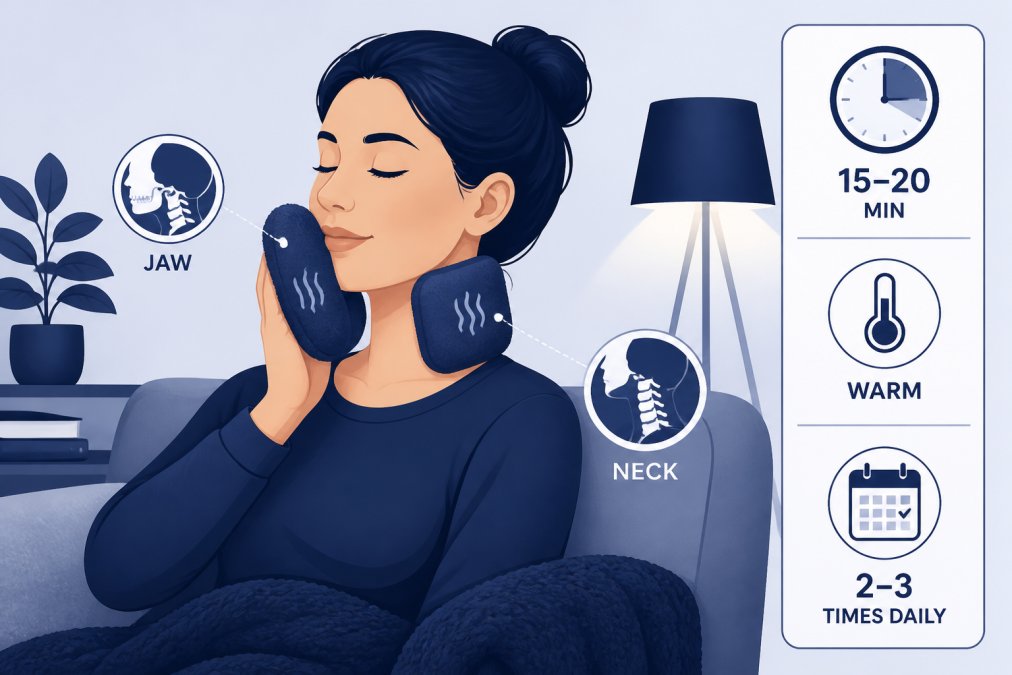
Temporary relief strategies include applying heat to relax tight jaw muscles. A warm compress applied to your jaw for 15 minutes several times daily reduces tension and pain. Gentle jaw stretches improve flexibility and reduce muscle tightness. Massage your jaw muscles with gentle circular motions to release tension.
Over-the-counter pain relievers like ibuprofen reduce inflammation and discomfort, though they’re best used short-term. A soft diet that minimizes chewing strain helps enormously. Avoid hard, crunchy, or sticky foods. Chew on both sides of your mouth equally to avoid overloading one side.
Habits to avoid include chewing ice, hard candy, or pen caps. Don’t rest your chin on your hand or sleep on one side of your face, as these create asymmetrical pressure. Avoid clenching your teeth during the day; if you notice yourself clenching, consciously relax your jaw. Limit caffeine and stimulants, which increase muscle tension.
Stress management directly impacts your bite because psychological stress triggers jaw clenching and muscle tension. Practices like deep breathing, meditation, or gentle yoga help reduce stress-related tension. Getting adequate sleep is crucial, as fatigue increases muscle tension and pain sensitivity.
Why Treating Bite Misalignment Matters for Your Overall Health
The effects of bite misalignment extend far beyond your mouth.
Effects on chewing efficiency and digestion are direct and measurable. When your bite is misaligned, you can’t chew food thoroughly, meaning larger food particles enter your digestive system. A properly aligned bite allows you to chew efficiently, which begins the digestive process in your mouth and reduces stress on your digestive system.
Connection to breathing, sleep quality, and systemic health is increasingly recognized by medical and dental professionals. Research from Sleep Medicine Reviews on airway-centered dental approaches documents that bite misalignment often correlates with airway restriction and sleep-disordered breathing. When your bite is misaligned, your jaw position may be compromised, narrowing your airway and contributing to sleep apnea and poor sleep quality. Poor sleep affects immune function, metabolism, mental health, and cardiovascular health.
Bite misalignment creates chronic muscle tension that affects your posture. Your neck and shoulder muscles compensate for jaw imbalance, creating postural problems that extend down your spine. This chronic tension contributes to headaches, neck pain, and upper back pain.
A misaligned bite increases your risk of periodontal disease because uneven chewing forces stress certain teeth and gums. Periodontal disease is linked to cardiovascular disease, diabetes, and respiratory infections. By addressing bite misalignment, you’re investing in more than dental comfort, you’re supporting your overall health.
Real Smile Dentistry’s airway-centered approach recognizes these connections. Rather than treating your bite in isolation, we evaluate how it affects your breathing, sleep, and overall body function. This comprehensive perspective often reveals that bite correction also improves sleep quality, reduces headaches, and enhances overall well-being.
If you’ve been dealing with bite discomfort, jaw pain, or headaches linked to misalignment, professional evaluation is your next step. Real Smile Dentistry combines advanced diagnostic technology with a physiologic approach that treats the root cause of your bite problem. Whether your misalignment is temporary tension or a structural issue requiring orthodontics or restoration, our team uses CT scans, intraoral imaging, and functional analysis to create a personalized treatment plan. Contact us to schedule a consultation and discover how bite correction can restore your comfort and support your overall health.
Frequently Asked Questions
What does a misaligned bite feel like, and is it always noticeable?
A misaligned bite may feel like your teeth do not meet evenly when you close your mouth, or you might notice one side contacts before the other. Some people experience a clicking or popping sensation in the jaw joint. Others feel discomfort only during chewing. Mild misalignment may be subtle, you might not notice it until a dentist points it out. Severity varies widely: some people have significant malocclusion with minimal symptoms, while others with minor bite shifts experience noticeable discomfort.
Can stress and teeth grinding cause your bite to feel misaligned?
Yes. Stress-related jaw clenching and bruxism (teeth grinding) can create the sensation of bite misalignment. Repeated muscle tension and grinding wear down tooth surfaces unevenly, changing how your teeth meet. This is often temporary: when stress decreases and clenching stops, the sensation may improve. However, chronic bruxism causes permanent dental wear and can shift teeth over time. If stress is your primary trigger, addressing the underlying tension through relaxation techniques, stress management, or a night guard can help prevent further changes to your bite.
How do I know if my bite problem is temporary or permanent?
Temporary bite shifts often follow dental work, tooth loss, or acute stress and may resolve within days or weeks as swelling reduces or habits change. Permanent changes result from skeletal misalignment, significant tooth wear, missing teeth, or structural jaw problems. A dentist can distinguish between the two using imaging and examination. If your bite feels off after a filling or crown, give it a few days before assuming it is permanent. If the sensation persists beyond two weeks or worsens, schedule a professional evaluation to determine whether intervention is needed.
What is the difference between a misaligned bite and TMJ disorder symptoms?
Malocclusion refers to how your teeth meet; TMJ disorder (TMD) involves dysfunction of the jaw joint itself. You can have a misaligned bite without TMD, or TMD without obvious malocclusion. TMD typically includes jaw pain, clicking or popping sounds, limited jaw opening, or headaches. A misaligned bite may cause chewing difficulty or uneven wear but not always joint pain. Both conditions can coexist: poor bite alignment can stress the jaw joint and trigger TMD over time. A dentist or specialist can diagnose which condition you have through examination and imaging.
What should I do right now if my bite suddenly feels misaligned?
First, assess whether something obvious changed: did you have recent dental work, lose a tooth, or experience trauma? Note any accompanying symptoms like pain, swelling, or jaw clicking. If the shift is painless and minor, monitor it for a few days, some changes resolve naturally. Apply ice or heat to reduce inflammation if there is discomfort. Avoid hard or sticky foods that strain your jaw. Contact your dentist if the misalignment persists beyond a week, causes pain, affects chewing, or comes with other symptoms. Early evaluation prevents small problems from becoming larger ones.
This article was written using GrandRanker